The fastest way to memorize a script is to learn it out loud, in small chunks, and test yourself from memory rather than rereading it. Rereading feels productive but mostly builds recognition: you know the words when you see them. Speaking them without the page is what builds recall, which is what you need on camera. The steps below work for a two-minute video, a pitch or a short talk.
Before you start: make the script easier to remember
A script that sounds like you is far easier to learn than one written to be read.
- Use your own words. If a sentence never comes out the same way twice, rewrite it the way you naturally say it.
- Shorten sentences. One idea per sentence.
- Give it a clear order. Hook, two or three points, a close. A logical sequence is half the memorizing done.
The guide on how to write a script for a video covers this in detail.
Step 1: learn the structure first
Write each section as a single cue word or short phrase, in order, on one line or a small card. For a product video it might read: problem, old way, what changed, demo, price, call to action. Say the whole video out loud from these cue words only, in your own improvised wording. Do this two or three times.
Now you know where you are going. Everything after this fills in detail on a skeleton you already have.
Step 2: split the script into chunks
A chunk is one to three sentences, a single thought. Mark them on the page with a line or a blank line.
Step 3: learn each chunk out loud
For each chunk:
- Read it aloud two or three times, slowly, with meaning.
- Look away and say it. Check the page only when you are stuck.
- Repeat until you can say it twice in a row without looking.
Then add the next chunk, and run from the start of the section through the new one. This cumulative run is what links the chunks so you do not freeze between them.
Step 4: use first-letter prompts for tricky lines
For a line you keep getting wrong, write only the first letter of each word: “Most videos lose people in the first five seconds” becomes M v l p i t f f s. Try to say the full line from the letters. It forces recall while still giving a gentle hint, and is a good halfway step between the full text and nothing.
Step 5: record yourself and listen
Record one full run on your phone and listen back while doing something else, such as walking or washing up. You will hear where you hesitate, which tells you exactly which chunk needs work. Listening also helps the rhythm of the lines stick.
Step 6: space it out
Short sessions with breaks work better than one long session. A pattern that suits most people:
- learn the structure and the first chunks in the evening
- run it from memory the next morning, before looking at the page
- fix the gaps, then run it once more before recording
Many performers find lines settle better after sleep, so the morning run is often surprisingly good.
Step 7: rehearse in conditions close to the real thing
Stand or sit as you will on the day, look at the camera lens, and say it at full energy. Lines learned while mumbling at a desk can vanish under lights. Do at least one run where you do not stop for mistakes: carry on, as you would on camera.
What to learn word for word
You do not need every word fixed. Learn these exactly:
- the opening line, so you start with confidence
- the closing line and call to action
- numbers, names, prices and dates
- any wording with legal or technical weight
For the rest, knowing the order of ideas is enough. Small wording changes from one take to the next sound natural.
When memorizing is the wrong tool
Memorizing pays off for short pieces, live talks where you move around, and lines you will repeat often. It is a poor trade for:
- long scripts, such as courses, explainers or anything over a few minutes
- dense detail like specifications, steps or numbers that change between versions
- scripts that change often, where you would re-learn them every time
For those, reading from a teleprompter is quicker and less stressful. The key is placing the text right under the camera with short lines, so your eyes stay on the lens. A hybrid works well too: memorize the opening and the close, and read the middle. See teleprompter reading speed for line length and pace.
Practise with the script, then without it
The free online teleprompter on this site can follow your voice while you rehearse, which makes it a gentle way to practise: read it with the prompter, then try a run with the text hidden.
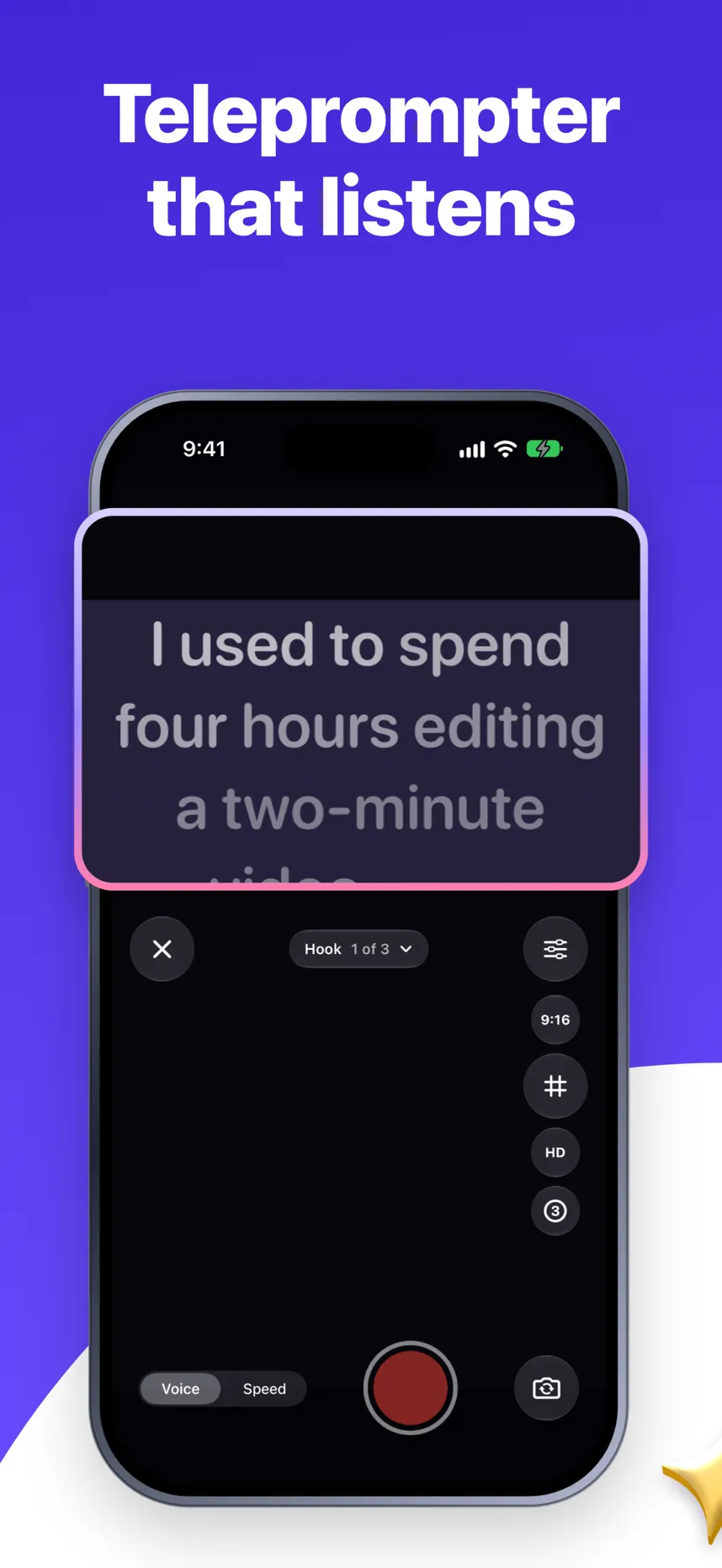
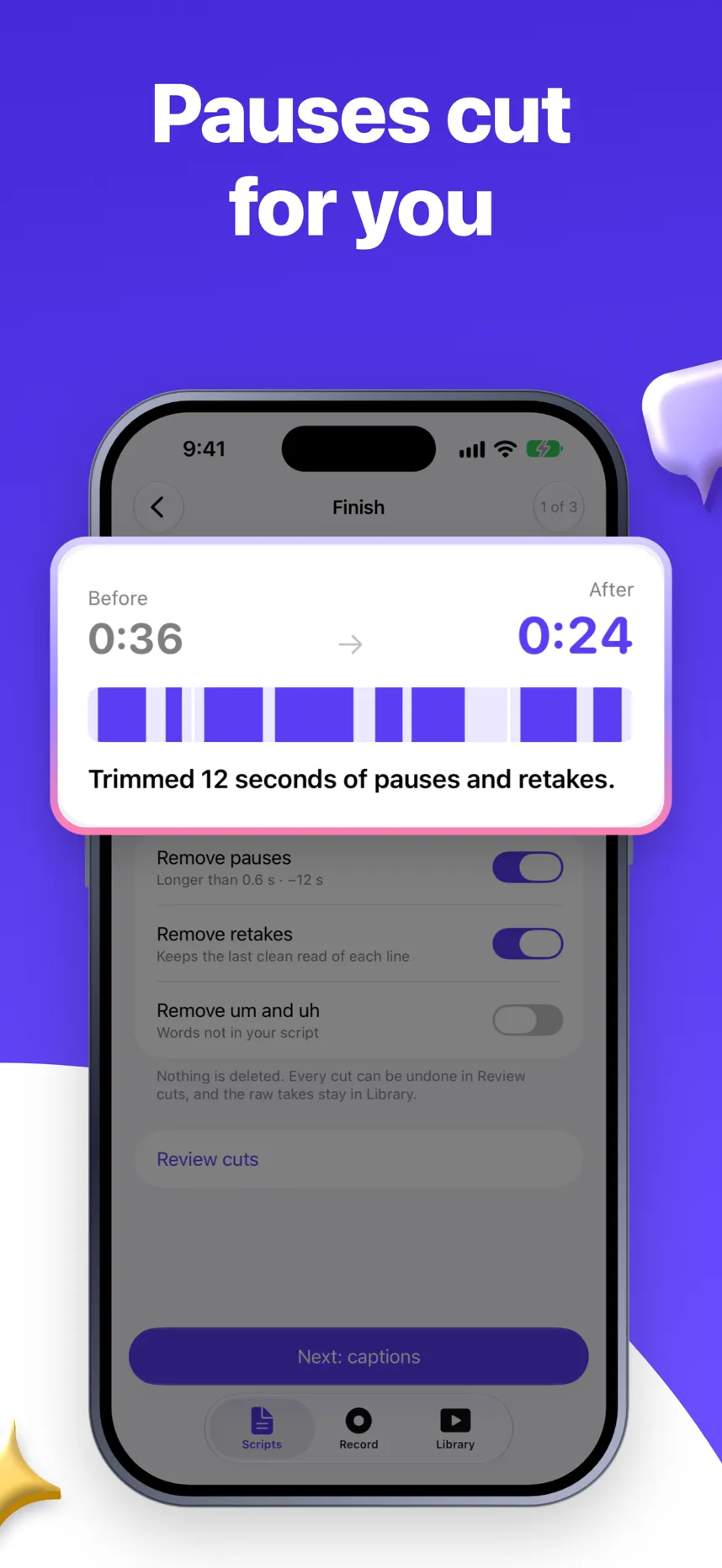
Cue for iPhone and iPad keeps the script under the front camera while you record, follows your voice on the device, and with Cue Studio can record a practice run so you can play it back and hear where you hesitated. When the take is done, it cuts pauses and retakes and adds captions spelled from your script.